
What to wear
If you do any amount of riding, at some point you’re going to get caught in the rain!
 This doesn’t have to be a negative experience—in fact, it can be quite fun at times. If you know you’re going to ride in the rain, having a good, breathable rain jacket will help keep you dry and can be worn over your regular clothes. Other recommended gear to grab for yourself:
✅ Cycling gloves (short-finger gloves) – For better grip & control.
✅ Rain jacket – Great to get a light, breathable jacket in a very visible colour. Look for reflective elements that make you more seen!
✅ Waterproof backpack/panniers/bags – The peace of mind knowing your stuff isn’t getting drenched is absolutely priceless. They also make waterproof bag covers that can be slipped over your backpack/messenger bag if you don’t want to get a whole new bag.
Outfit your bike
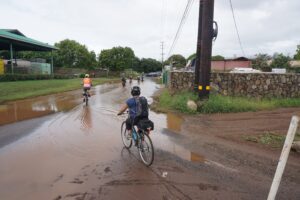 For a rain-proof ride, add this gear to your rainy-day ride arsenal.
When riding on wet roads, you may experience rain, spray, and grime from other vehicles. All of these make it difficult to see. Since visibility is critical, wear bright colors, use a bright headlight, and equip your bicycle with a red rear light. Blinking lights help alert other road users to your presence.
Gear up for the rain:
✅ Fenders/mud flaps – Help keep the water on your wheels from spraying on you or the rider behind you.
✅ Lights – essential to riding in any low-visibility situations. Make sure they’re charged and placed on your bike where others can see them.
✅ Reflectors – Mount reflectors low enough to be visible within the low beams of most motor vehicles. Ensure the surface is free from grime/dirt so they actually reflect the light back.
✅ Shower cap – If you have to lock up your bike outside in the elements, slipping a simple shower cap over your saddle can at least keeps your seat dry when you return.
Riding in the dark or rain may happen unexpectedly, and some lights will get overpowered by a motor-vehicle’s headlights. This isn’t the case with reflective tape and clothing, so it’s recommended to incorporate both.
Keep in mind where and how the light or reflector is mounted. Mount lights high enough on the bike to be visible. While the seat post is the highest part of the bike, and an excellent place to mount a taillight, be careful not to block the light with cargo or bags on the bike’s rear rack. Rear rack-mounted lights are also good but can be subject to vibration that can bounce them around.
What to Watch out for in Wet Conditions
You must be extra attentive to road surface conditions when riding in the rain. Wet roads can be slippery.
 Tar, grease, and oil accumulations mixed with rain reduce the traction of bike tires, and road hazards are even more dangerous whenwet. Pay extra attention to the road paint and tape marking a bike lane, some of which may be extra slippery.
Avoid riding over any kind of metal covering (storm grates, manhole covers, steel plates, etc.), road markings with thick paint, and wet leaf debris. If you do have to ride over these surfaces, head straight and try to avoid braking or making turns on these surfaces.